
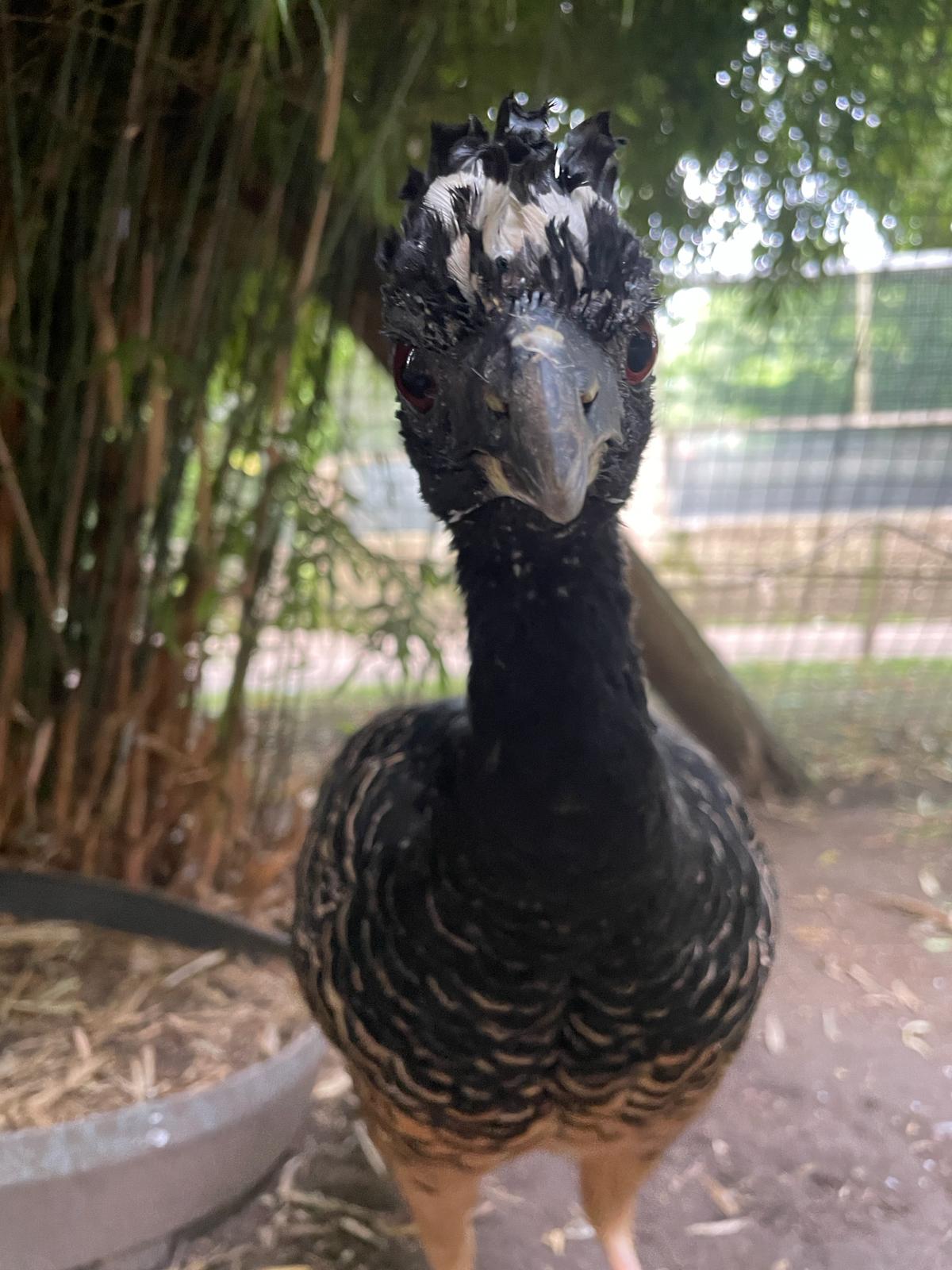
Bare-faced curassows (Crax fasciolata) are large, ground-dwelling birds native to South America, primarily found in Brazil, Paraguay, and Argentina. They belong to the Cracidae family, known for their striking appearance and behavior.
These birds are characterized by their distinct facial features, including a featherless, brightly colored patch of skin around their eyes and beak, which varies in color depending on the subspecies.
Bare-faced curassows inhabit dense tropical forests and feed primarily on fruits, seeds, and small invertebrates. They are predominantly arboreal, but also spend time foraging on the forest floor.
Due to habitat loss and hunting pressure, they face threats to their survival, and their populations are declining. Conservation efforts are underway to protect their habitats and mitigate hunting pressures to ensure the long-term survival of this unique species.
Bare-faced curassows play a crucial role in maintaining the balance of their ecosystems as seed dispersers and are therefore considered important indicators of forest health.