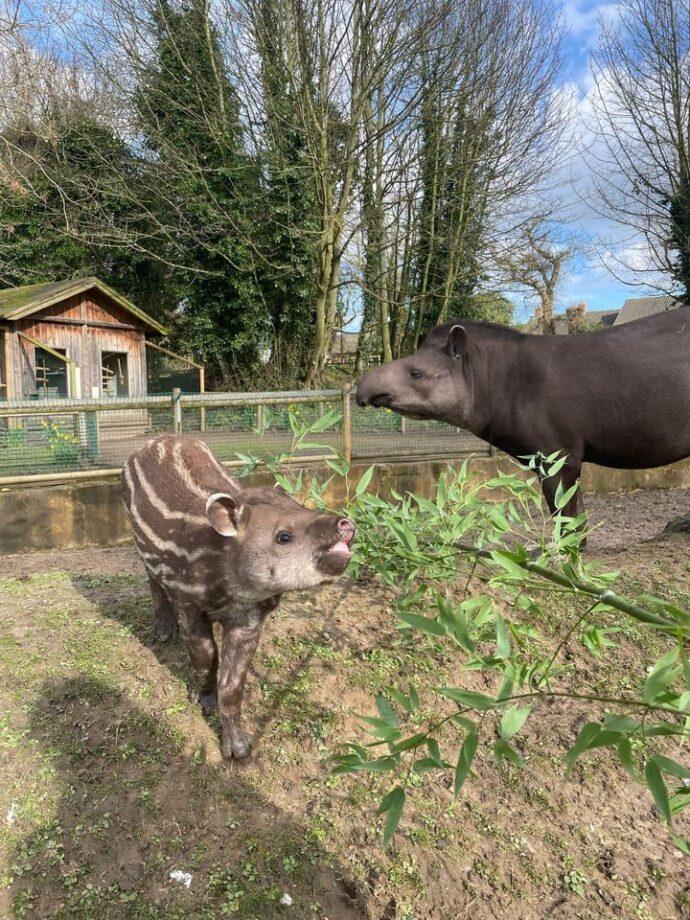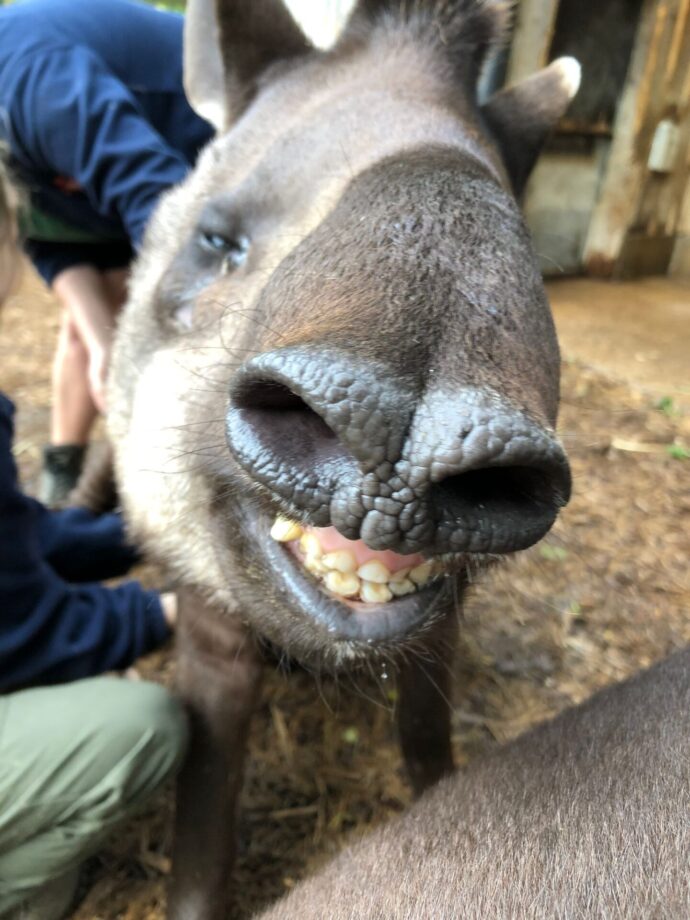
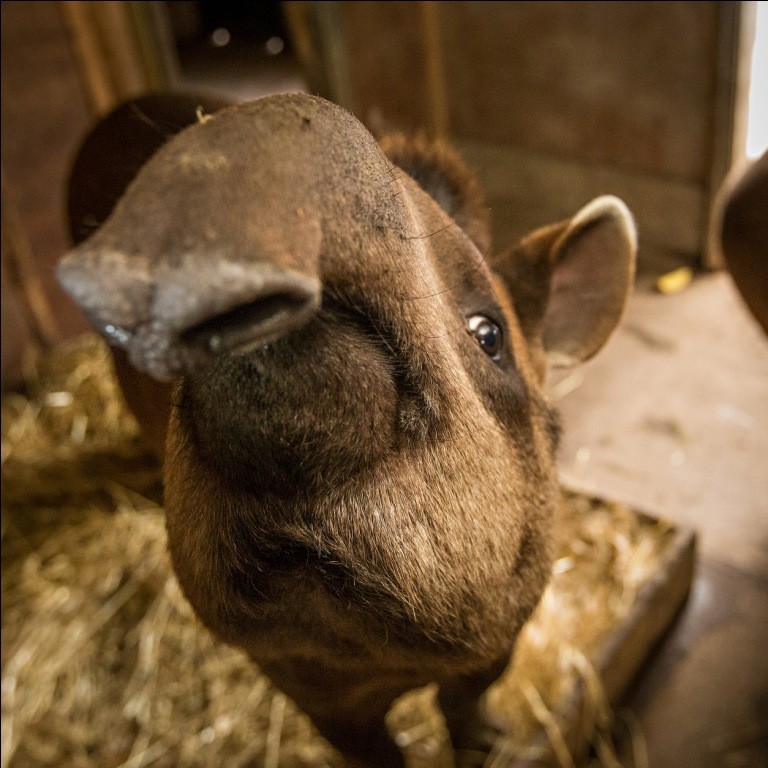
One of the largest of three species to be found in South America, the Brazilian Tapir (Tapirus terrestris) has the widest distribution. Its closest relatives are the rhinoceros and the horse, and its trunk-like snout is used for uprooting aquatic food plants.
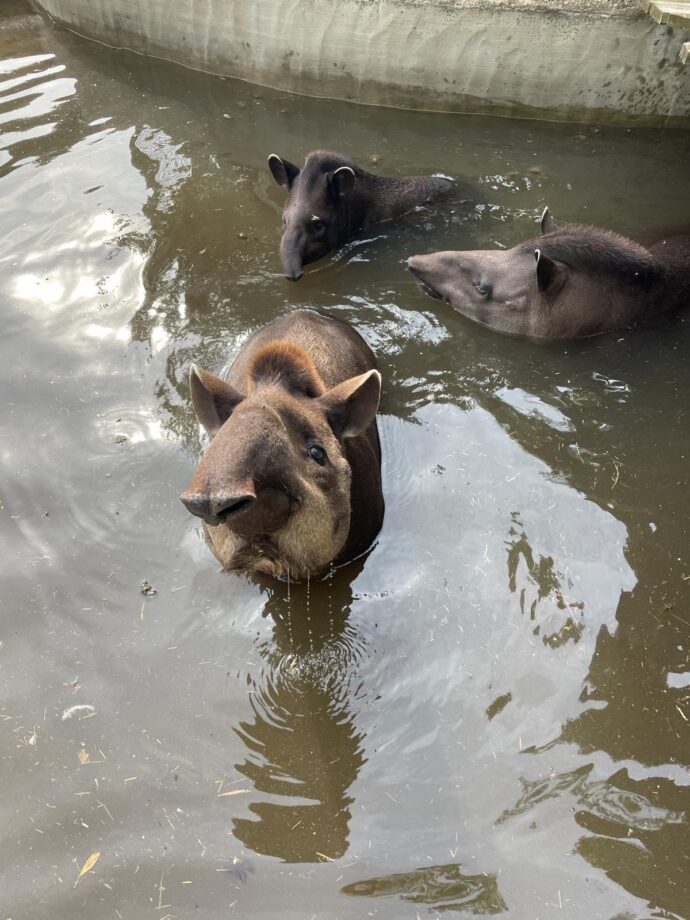
It can remain submerged in water to stay cool or to avoid predators, using its trunk as a snorkel for breathing. It occurs widely in northern and central South America. They are great swimmers and divers.
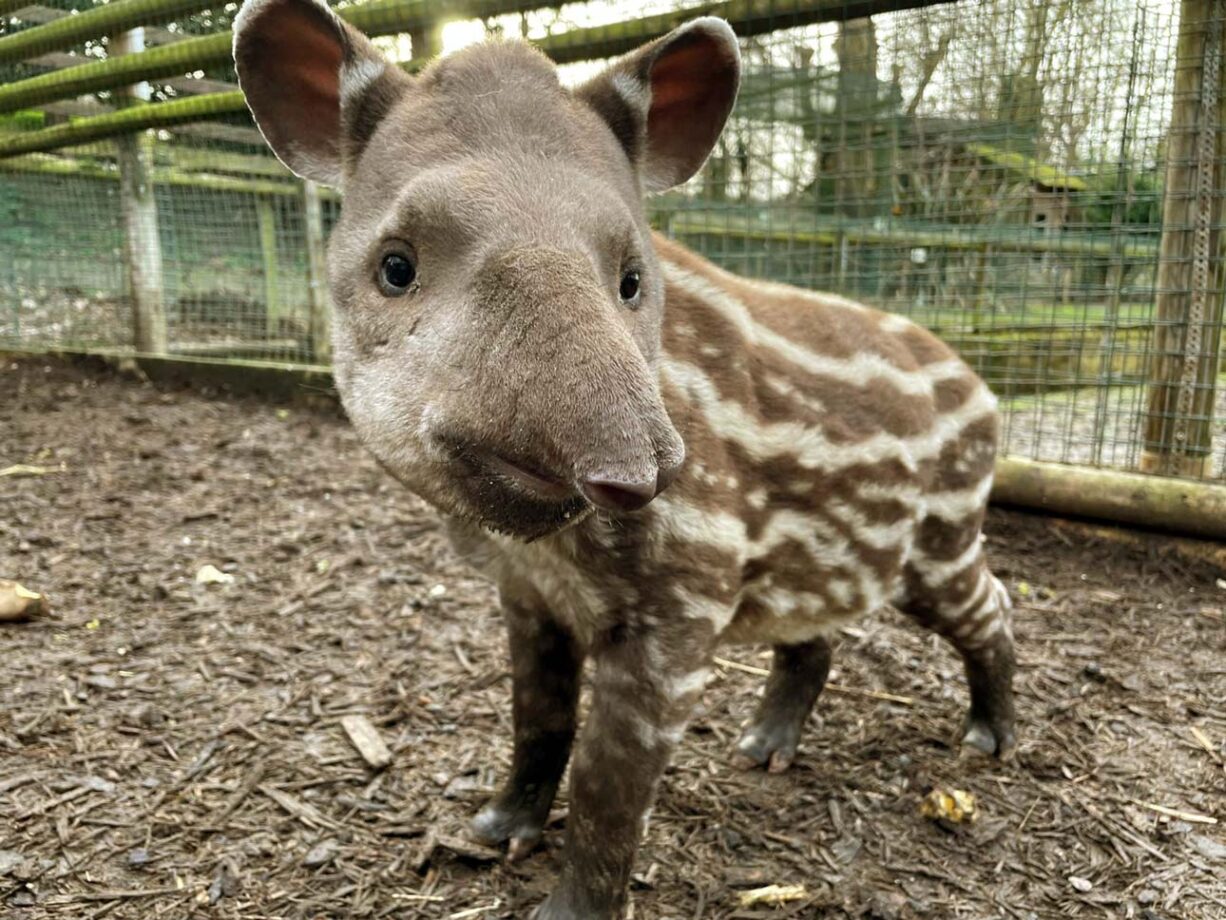
Baby tapirs have brown fur with white stripes to help them blend into the rainforest floor. They generally feed only at night, hiding in the cool forest during the day.